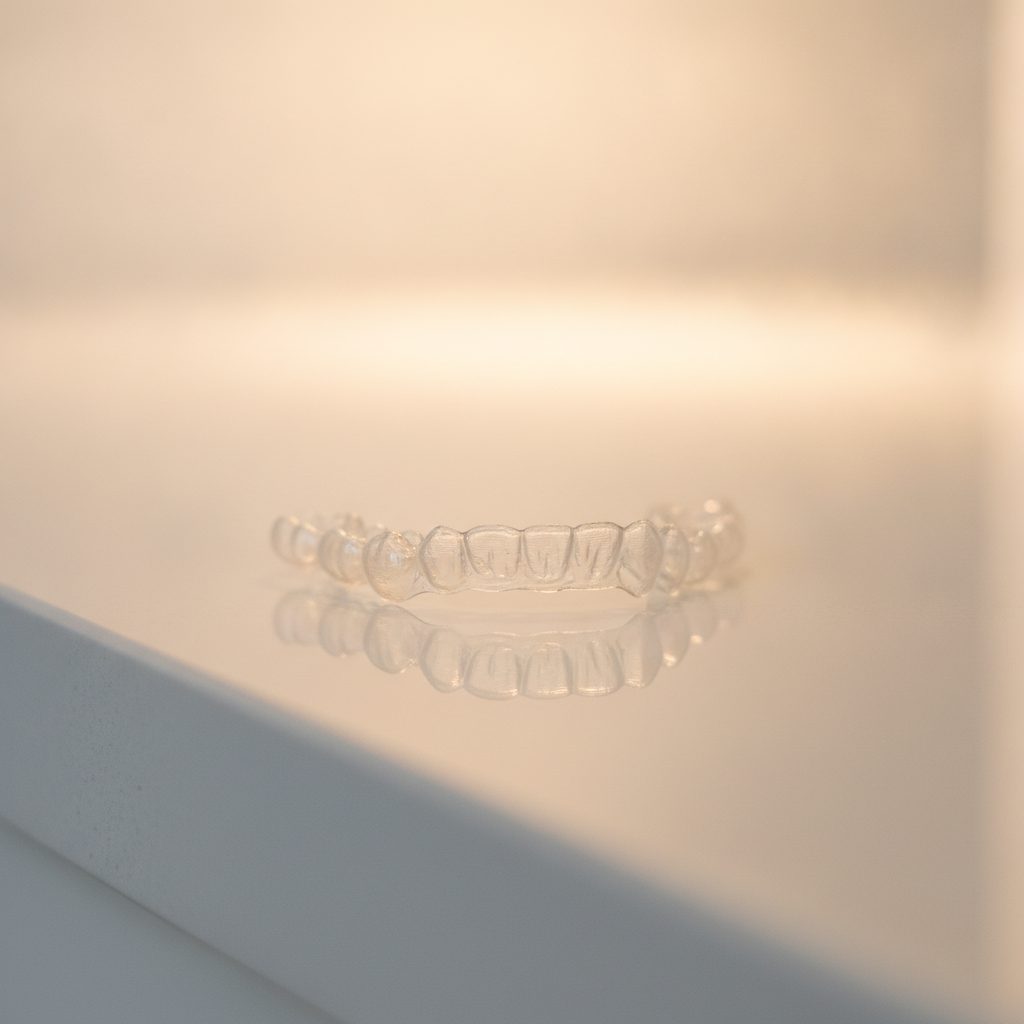
What actually drives an Invisalign quote
Two people with similar teeth can walk out of two different offices with quotes thousands of dollars apart, and both numbers can be legitimate. Invisalign is not priced off a published rate card. Align Technology charges each provider a lab fee per case, and the provider sets their own markup on top of that based on overhead, training, and how much competition they have nearby.
The single biggest factor is how much movement your teeth need. A patient closing a small gap with 10 aligner trays is not paying for the same product as someone correcting a rotated bite over 30 trays and 18 months. After that, the provider matters: an orthodontist who treats hundreds of Invisalign cases a year typically charges more than a general dentist who offers it as one service among many, though the orthodontist may also produce more predictable results on anything beyond mild cases. Location moves the number too. A practice in a high-rent metro charges more than one in a small town for the same treatment plan, which is why the calculator below asks for your ZIP.
Insurance and pretax accounts are the one lever most people forget to pull. A plan with an orthodontic benefit often knocks a real chunk off the total, and HSA or FSA dollars can cover the rest pretax. None of this shows up on the sticker price a provider quotes verbally, so ask for it in writing.
Average Invisalign cost by case type
| Case type | What people typically pay |
| Minor (Express / Lite) | $1,800 - $3,500 |
| Moderate case | $4,000 - $6,000 |
| Full / comprehensive | $6,000 - $8,500 |
| Invisalign Teen | $4,000 - $7,000 |
| vs Metal braces | $3,000 - $7,000 |
| With ortho benefit (savings) | $1,500 - $3,000 |
Invisalign vs the alternatives, honestly
Invisalign is not the only way to straighten teeth, and it is not always the right call. Here is how it stacks up against the realistic alternatives, without the sales pitch.
Metal braces. Braces typically run $3,000 to $7,000, overlapping heavily with Invisalign's range. For complex bite corrections, especially in patients whose jaws are still developing, braces are often more predictable and can end up cheaper once you count refinements. If discretion and removability do not matter to you, braces are a reasonable default, not a downgrade.
At-home clear aligner brands (Byte, Candid, and similar). These run cheaper than Invisalign, and they can work for mild spacing or crowding. The tradeoff is real: treatment is monitored remotely instead of by a dentist who sees your mouth in person, so problems with bite or tooth movement can go unnoticed longer. For anything beyond a small, simple correction, an in-office evaluation first is the safer path, even if you end up going the at-home route after. See our side-by-side look at Byte, Candid, and the other aligner brands for exact current pricing and availability.
Doing nothing for now. Waiting is a legitimate choice, especially if the issue is cosmetic and minor. The tradeoff is that mild crowding or spacing can slowly worsen over years, and some insurance orthodontic benefits are use-it-or-lose-it on a lifetime basis rather than annual, so check your plan before assuming you can start later at the same cost.
If your case is mild, cost matters more than speed, and you are comfortable with less in-person oversight, an at-home aligner brand or waiting may make sense. If your case is moderate to complex, or you want a dentist checking on tooth movement in person, Invisalign or braces are the more defensible choices, and the honest answer for which of those two depends mostly on your bite, not on marketing.
See what local providers would charge
The calculator above gives you a planning range. An actual quote requires a dentist or orthodontist to look at your teeth, usually with a scan or X-rays, and put a number in writing.
Get a real number from someone nearby
Vetted local orthodontists and general dentists can price your actual case, not just a range, and there's no obligation to book with anyone you talk to.Crunch it
Connecting through this page may earn us a referral fee. It doesn't change what you pay.
Before you decide: common questions
Does insurance cover Invisalign?
Many dental plans include a one-time orthodontic benefit, commonly $1,500 to $3,000, that applies to Invisalign. Coverage varies, so check your orthodontic lifetime maximum.
Is Invisalign cheaper than braces?
They are usually similar. Metal braces can be a bit cheaper for complex cases, while Invisalign is favored for comfort and appearance.
How long does Invisalign take?
Most cases run 6 to 18 months. Minor corrections can finish in a few months, and complex cases take longer.
Can I pay monthly for Invisalign?
Yes. Most providers offer monthly payment plans, and you can often use HSA or FSA funds to lower the after-tax cost.
Is Invisalign cheaper than at-home aligners?
At-home brands can be cheaper, but Invisalign includes in-person dentist supervision, which matters for anything beyond minor movement.
How much does Invisalign typically cost?
Invisalign treatment in the US typically costs between $3,000 and $8,000 depending on case complexity, the number of aligners needed, and your provider's location. Mild corrections may fall toward the lower end, while complex cases requiring full arch movement land at the higher end. Many orthodontists offer interest-free payment plans, and dental insurance that covers orthodontics often contributes $1,000 to $2,000 toward the total.
What is a cheaper alternative to Invisalign?
Over-the-counter aligner brands such as Byte or Candid offer lower-cost options, typically ranging from $1,500 to $2,500, but they are only suitable for mild tooth spacing and crowding issues and involve remote monitoring rather than in-person care. Traditional metal braces are another alternative and can cost less than Invisalign while handling a wider range of cases. For anything beyond minor corrections, consulting an in-office orthodontist is the safer choice.
Why don't dentists recommend Invisalign?
Some general dentists lack the advanced training for complex Invisalign cases and may prefer to refer patients to an orthodontist who treats more challenging alignments daily. Additionally, certain bite issues and severe crowding are genuinely better addressed with traditional braces, so a dentist recommending an alternative is not necessarily a criticism of Invisalign itself. Getting a second opinion from an orthodontist certified in Invisalign can clarify whether you are a good candidate.
In-depth Invisalign guides
Provider fees shift over time as lab costs, rent, and local demand change. If you got a quote a while back and are still deciding, it is worth asking your provider to re-run the number before you commit, rather than assuming the figure you were told months ago still holds.